
Anyone comparing AI options can quickly end up with a table of model scores, feature lists, context-window sizes, and claims about reasoning. The natural question becomes:
Which model is best?
That question is understandable. It is also usually too early.
A model is one component inside a business solution. It can generate, classify, summarize, reason, or retrieve with impressive capability, but it does not define the workflow around itself. It does not decide which information employees may access, when a human must review an answer, how exceptions are handled, whether the output fits the next step in the process, or whether the operating cost is justified.
The better first question is:
What must this business process accomplish, under what conditions, and what is the least complex system that can do it reliably?
That change in sequence matters. It turns model selection from a technology contest into a business-design decision.
Benchmarks are useful, but they answer bounded questions
A benchmark creates a controlled way to compare models. That is valuable. Without standardized scenarios and metrics, model claims would be even harder to evaluate.
But a benchmark score is evidence about performance under selected conditions. It is not a general certificate of business fitness.
Stanford’s Holistic Evaluation of Language Models project was built around this limitation. HELM evaluates models across multiple scenarios and metrics, including accuracy, calibration, robustness, fairness, bias, toxicity, and efficiency, while explicitly recognizing that important scenarios and metrics remain missing. The point is not that benchmarks are useless. The point is that evaluation must be broader than a single score and honest about what it does not cover. Holistic Evaluation of Language Models
Your business introduces conditions that a public leaderboard may not test:
- your documents and data quality;
- your terminology and exceptions;
- the way employees ask questions;
- the consequences of a wrong answer;
- the amount of human review available;
- the systems the model must use;
- privacy and access requirements;
- latency and volume;
- the cost of implementation, monitoring, and correction;
- whether people will consistently use the result.
A model may perform well on a reasoning benchmark and still fail because the workflow supplies incomplete information. Another model may be less capable in the abstract but entirely adequate for a narrow task with structured inputs, clear constraints, and human review.
Benchmarks should inform model selection. They should not replace evaluation in the intended workflow.
The model is not the system
Consider a hypothetical eight-person property-management company that receives maintenance requests by email, text, and a web form. The owner wants AI to categorize each request, identify urgency, draft a response, and route it to the right contractor.
It is easy to focus on which model writes the most polished response. Yet the operating result depends on much more:
- Are requests consolidated into one reliable intake process?
- Does the system know which conditions count as emergencies?
- Can it distinguish tenant inconvenience from a safety risk?
- Does it have current contractor availability and property information?
- Who reviews the decision before a non-emergency request is delayed?
- What happens when the request is ambiguous?
- Is the drafted response recorded in the property-management system?
- Can the team see why the request was routed a certain way?
A more capable model may improve classification at the margin. It cannot compensate for a missing emergency policy, stale contractor data, or an unclear owner-review step.
The business solution includes the model, but it also includes the inputs, instructions, workflow, tools, permissions, human responsibilities, exception handling, monitoring, and maintenance. The value comes from how those parts work together.
That is why a workflow is ready for everyday use only when the whole system is ready, not just the model.
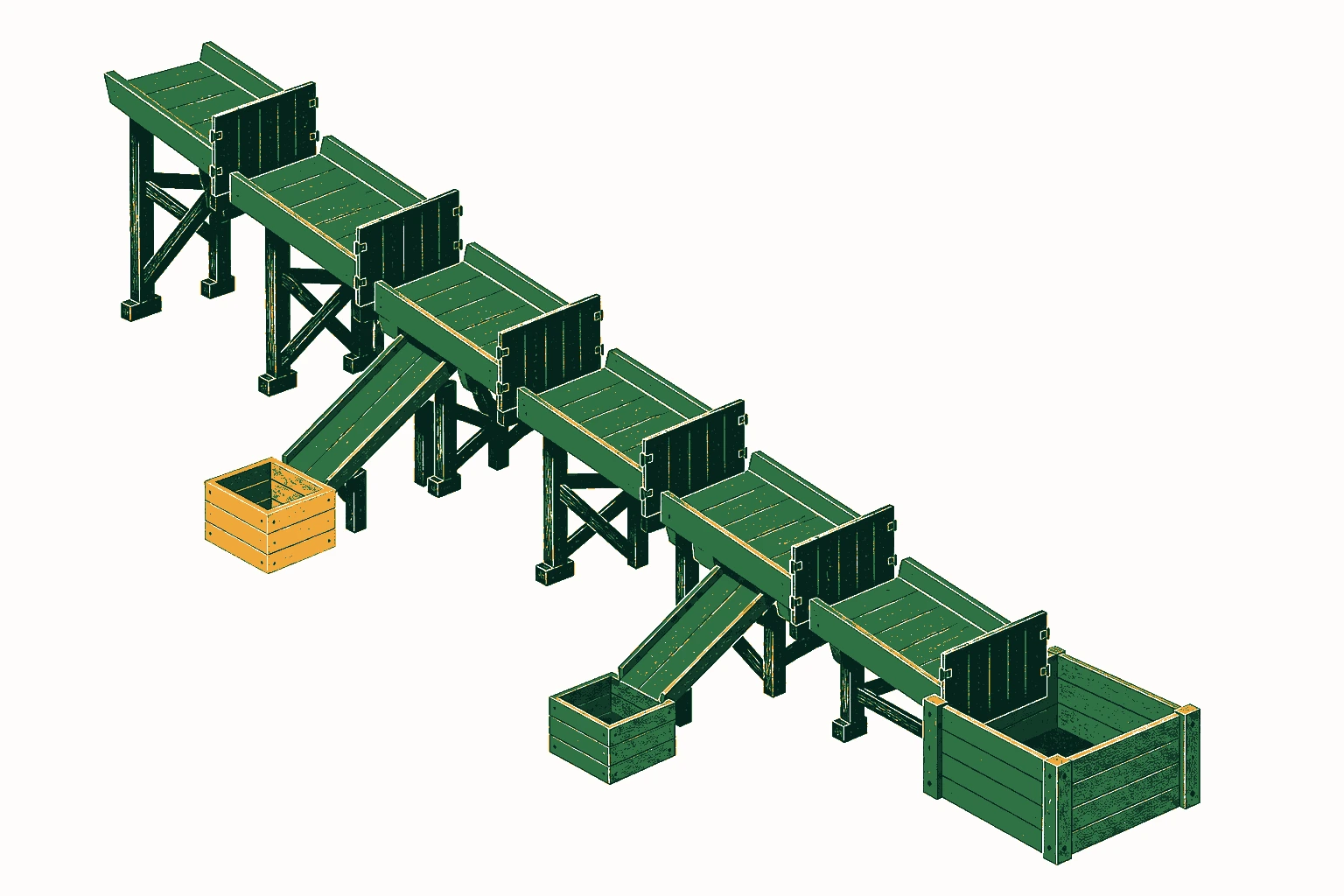
- Intake
- Current information
- AI processing
- Human review
- Routing
- Monitoring
- Exception: clarify input
- Exception: escalate decision
Business value depends on how the whole system works
A stronger model earns its place only when the added capability improves the outcome enough to justify the added burden. That means looking at several parts of the system together.
1. The required outcome
Start with the business consequence, not the AI feature.
What is currently too slow, expensive, inconsistent, risky, or dependent on scarce attention? What observable change would make the work better?
“Use AI to answer customer questions” is not a sufficient outcome. A more useful definition might be:
Reduce the time employees spend answering repetitive order-status questions while preserving accurate escalation of exceptions.
That definition establishes a workflow, a value source, and an important limit. It also leaves open the possibility that the right solution is better self-service, conventional automation, improved order notifications, AI assistance, or a combination.
2. Reliability in the real workflow
Average model quality is less important than performance on the cases your business actually encounters.
A solution should be tested against representative routine cases, difficult cases, incomplete inputs, conflicting information, and situations where the correct action is to stop or escalate. The evaluation should measure the outcome that matters, not merely whether the response sounds plausible.
For a drafting workflow, that might include factual support, completeness, required language, correct routing, and reviewer effort. For classification, it might include false negatives on high-consequence categories. For extraction, it might include whether every required field is captured and traceable to the source.
NIST’s AI Risk Management Framework treats trustworthiness as a combination of characteristics such as validity and reliability, safety, security and resilience, accountability and transparency, explainability, privacy, and fairness. It also emphasizes that these characteristics must be balanced according to the context of use rather than treated as a universal checklist. NIST AI Risk Management Framework FAQs
A leaderboard cannot decide which errors your business can tolerate. That is a business and system-design decision.
3. Full operating cost
Model price is only one part of cost.
The business may also pay for:
- workflow redesign;
- integration;
- data preparation;
- employee training;
- human review;
- evaluation;
- monitoring;
- security and access controls;
- incident correction;
- vendor management;
- future migration;
- maintenance as the workflow changes.
A less expensive model inside a fragile custom system can be more costly than a well-fitted subscription product. A more expensive model can be economical when it materially reduces review time or enables a high-value task that a weaker model cannot perform reliably.
The correct comparison is not cost per token or subscription price in isolation. It is the total cost of producing an acceptable business outcome.
4. Usability and adoption
A technically impressive solution creates no durable value if employees cannot understand when to use it, do not trust it appropriately, or must work around it.
Adoption problems are often design problems. The output may arrive in the wrong tool. The employee may need to re-enter data. The interface may hide uncertainty. Review responsibilities may be unclear. Training may explain features without explaining the new workflow.
The intended users should be involved before the system is declared successful. Their role is not merely to approve the technology. They help reveal exceptions, missing information, handoff problems, and conditions that a technical evaluation may overlook.
NIST’s framework similarly treats AI risk management as ongoing work across design, deployment, use, testing, evaluation, and changing conditions. It is not a one-time model-selection event. Its Generative AI Profile extends that system-level approach specifically to generative AI. NIST Generative AI Profile
5. Risk and control
The appropriate level of control depends on what the system can affect.
A low-risk internal brainstorming assistant may need little more than clear usage guidance and basic data restrictions. A system that drafts regulated communications, changes financial records, makes eligibility recommendations, or contacts customers may require stronger access control, traceability, testing, review, and escalation.
Higher model capability does not remove these responsibilities. In some cases, more persuasive output can make weak controls more dangerous because errors are harder for a user to notice.
The question is not only whether the model can perform the task. The complete system must make correct use likely enough and keep harmful use within clear limits.
6. Maintainability and dependence
An AI workflow will change. Models are updated. Prices and limits change. Internal processes evolve. Documents move. Regulations and policies may change. Employees find new edge cases.
A solution should therefore be judged by how easily it can be inspected, changed, tested, and replaced.
A system that depends on one model’s unusual behavior, undocumented prompting tricks, or an excessive chain of tools may be difficult to maintain even if its initial demonstration is impressive. Simpler designs often make failure easier to understand and improvement easier to manage.
Complexity is not automatically bad. It is a continuing operating cost that must earn its place.
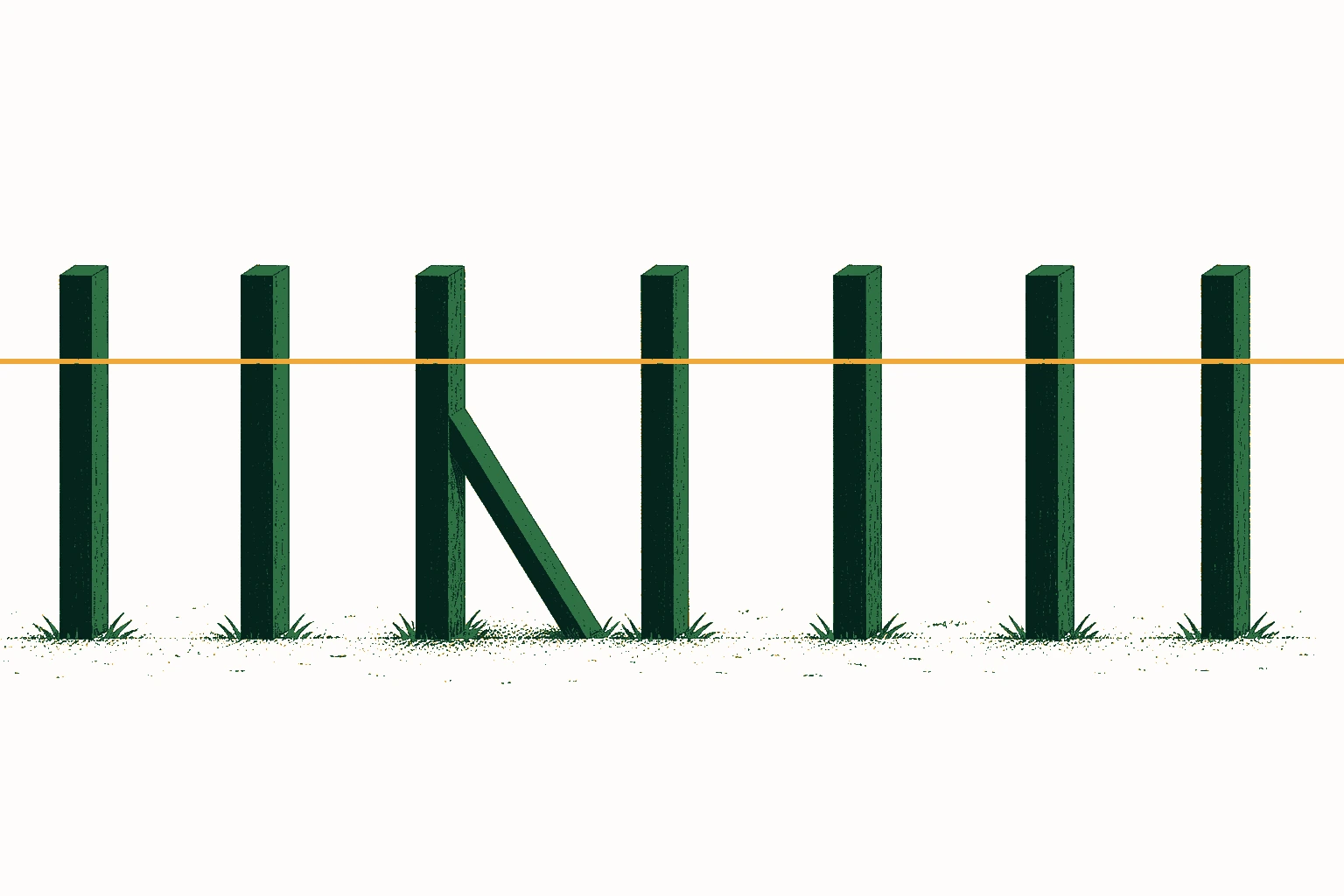
- Required outcome
- Workflow reliability
- Model capability
- Full operating cost
- Adoption
- Risk and control
- Maintain
ability
A business-first selection sequence
A practical AI decision can follow seven steps.
- Define the consequential problem. Identify the workflow, the current failure or constraint, and the business consequence. Avoid starting with a preferred tool.
- Define acceptable performance. State what a useful result must contain, which errors matter, when a human must review, and what evidence would support a go or no-go decision.
- Map the complete workflow. Identify inputs, people, systems, decisions, handoffs, permissions, exceptions, and the action that follows the AI output.
- Compare solution levels. Consider process change, training, conventional software, a general-purpose AI product, a tailored AI workflow, or no intervention. Do not assume customization is required.
- Test the smallest meaningful version. Use representative cases from the intended workflow. Compare alternatives using the same cases and decision criteria.
- Calculate the full burden. Include implementation, review, integration, risk controls, training, maintenance, and switching, not only the model fee.
- Select and revisit. Choose the least complex option that reliably meets the requirement. Re-evaluate when the workflow, evidence, cost, or available technology changes.
This sequence does not make model capability irrelevant. It puts capability in the correct place: after the business has defined what the model must contribute.
When the most capable model may be the right choice
Sometimes the strongest available model is the economically appropriate choice.
That is more likely when:
- the task genuinely requires complex reasoning, broad context, or difficult interpretation;
- errors are costly and testing shows a meaningful reliability advantage;
- the value of a correct output is high relative to model cost;
- greater capability substantially reduces human review or rework;
- the workflow is difficult to constrain through structured inputs or conventional software;
- the model’s deployment, security, and control options fit the operating requirements.
The decision should rest on evidence from the intended use, not the assumption that more capability is always worth buying.
A small company processing a limited number of high-value technical documents may reasonably choose an expensive model because the model cost is minor compared with expert time. The same company may use a basic subscription or conventional automation for routine scheduling and status updates.
There is no contradiction. Different workflows justify different solution levels.
Questions to ask before choosing a model
Before comparing model rankings, answer these questions:
- What exact business action or decision follows the output?
- What does an acceptable result mean in this workflow?
- Which failures are tolerable, and which require escalation?
- What information and system access are required?
- Who remains responsible for review and final action?
- How frequently will the workflow run?
- What is the full cost of implementation and operation?
- Can process change or conventional software solve the problem more simply?
- Will the intended users understand and consistently follow the workflow?
- What representative test would prove that one model is materially better for this use?
If these questions cannot be answered, the business is not ready to choose a model. It is still defining the problem.
Choose the system, not the winner
Model capability matters. It is simply not the same thing as business value.
The most powerful model can be the right component inside the right system. It can also be unnecessary capacity inside an expensive, unreliable, or poorly adopted workflow.
Gecko Road’s position is straightforward:
Start with the business consequence. Design the complete operating system around the required outcome. Then choose the least complex model and solution that can deliver that outcome reliably.
That approach may lead to a more advanced model. It may lead to a standard AI subscription, conventional software, process improvement, or no AI at all.
The goal is not to win a model comparison.
The goal is to improve the business.
Sources
- Holistic Evaluation of Language Models, Stanford Center for Research on Foundation Models.
- AI Risk Management Framework FAQs, National Institute of Standards and Technology.
- Artificial Intelligence Risk Management Framework: Generative Artificial Intelligence Profile, National Institute of Standards and Technology.